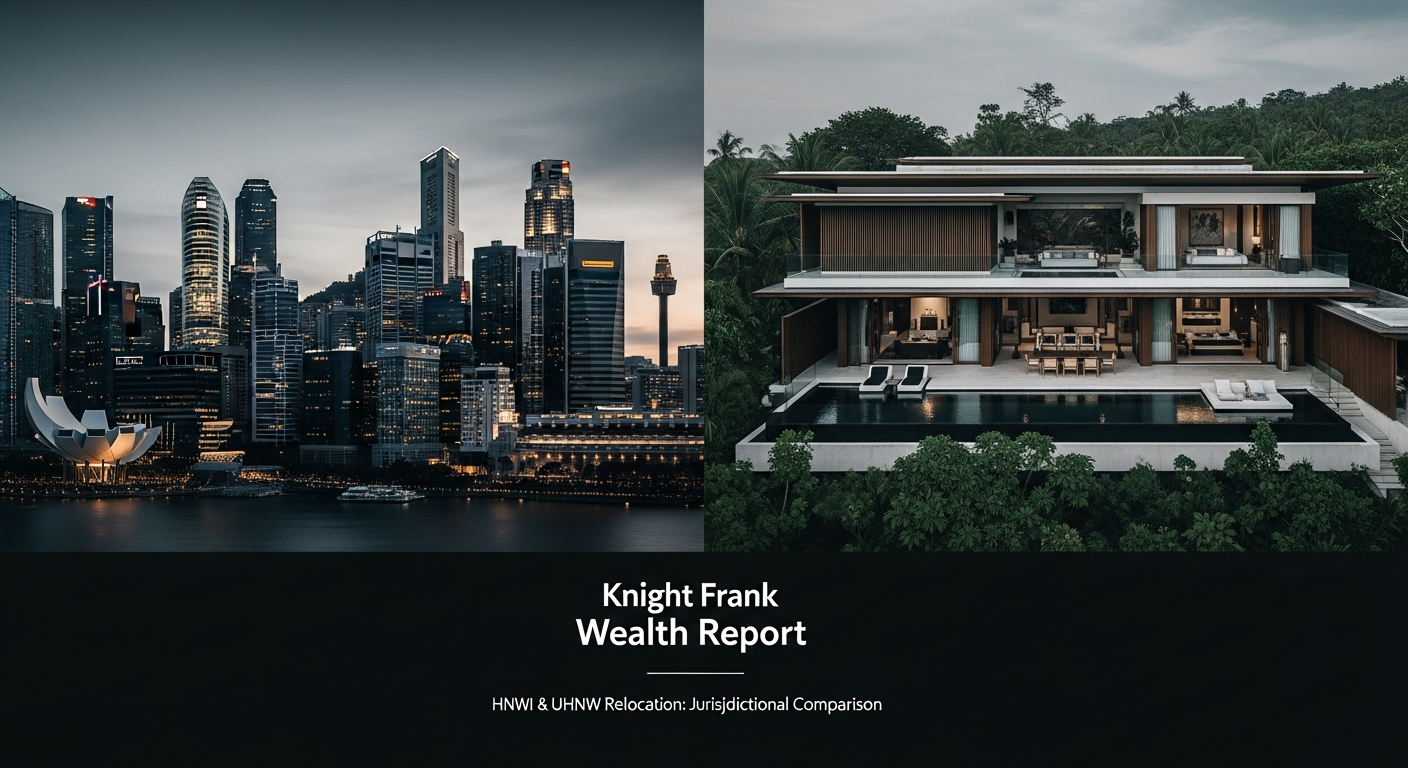
Bali is emerging as a compelling jurisdiction for High-Net-Worth Individuals (HNWIs) and family offices, driven by evolving residency frameworks, including the B211A visa and anticipated Golden Visa pathways. Indonesia’s regulatory bodies, Otoritas Jasa Keuangan (OJK) and Bank Indonesia (BI), are progressively enhancing financial infrastructure, while strategic tax incentives and a lower cost basis compared to established hubs like Singapore or Dubai present a distinct value proposition for wealth structuring and generational planning.
Global wealth migration patterns indicate a sustained interest in jurisdictions offering a blend of economic opportunity, regulatory stability, and a favorable operational environment. While established financial centers such as Singapore, Hong Kong, Dubai, and Switzerland have historically dominated the High-Net-Worth Individual (HNWI) and Ultra-High-Net-Worth Individual (UHNWI) landscape, Bali, Indonesia, is increasingly positioned as an attractive alternative. This analysis provides a comparative overview of Bali’s evolving framework against these traditional hubs, focusing on residency, tax, regulatory, and cost considerations for sophisticated investors and family offices evaluating an Indonesia presence. According to the Knight Frank Wealth Report 2024, Asia’s UHNWI population is projected to grow by 42% over the next five years, with Indonesia identified as a key growth market.
Residency Pathways and Immigration Frameworks: Bali vs. Global Hubs
Securing long-term residency is a primary consideration for HNWIs. Bali, under Indonesia’s evolving immigration policy, offers several pathways. The B211A visa, while initially designed for tourism, has been widely utilized for extended stays, though it does not automatically confer tax residency. For more permanent arrangements, Indonesia is actively developing a Golden Visa program, anticipated to require significant investment, potentially in the range of IDR 20 billion (approximately USD 1.3 million) for a 10-year permit, as per proposals under review by the Directorate General of Immigration (Imigrasi.go.id). This framework aims to attract foreign capital and expertise, offering a more streamlined path to Indonesian tax residency.
In contrast, Singapore’s Global Investor Programme (GIP) requires a minimum investment of S$2.5 million (approximately USD 1.85 million) into a new business entity or a GIP fund, leading to Permanent Resident status. The UAE’s Golden Visa offers 5- or 10-year residency for property investors with a minimum value of AED 2 million (approximately USD 545,000) or entrepreneurs. Hong Kong previously offered an investment migration scheme but currently focuses on talent attraction. Switzerland, while not having a direct investment visa, allows residency through a lump-sum taxation agreement, often requiring annual tax payments in excess of CHF 150,000 (approximately USD 165,000), negotiated at the cantonal level. Processing times for these established programs can range from 6 to 18 months, depending on the jurisdiction and complexity of the application. Bali’s B211A can be obtained within weeks, though the Golden Visa is expected to have a longer processing period once fully implemented, likely 3-6 months. The forthcoming Indonesian Golden Visa is positioned to offer a competitive alternative, particularly for those seeking a strategic base in Southeast Asia with a distinct lifestyle proposition.
Tax Regimes and Wealth Structuring: Indonesia’s Evolving Landscape
Indonesia’s tax residency rules are based on the 183-day presence test within a 12-month period, or demonstrating an intention to reside. Personal income tax rates are progressive, reaching 35% for annual incomes exceeding IDR 5 billion (approximately USD 325,000). Importantly, Indonesia does not currently levy inheritance or gift tax, a significant advantage for generational wealth transfer compared to jurisdictions like Switzerland, which has cantonal inheritance taxes up to 50%, or Hong Kong, which abolished its estate duty in 2006. Singapore also has no inheritance tax. Indonesia has an extensive network of Double Taxation Agreements (DTAs) with over 70 countries, mitigating tax complexities for cross-border investments. The implementation of the Harmonized Tax Law (UU HPP) in 2022 further clarified tax obligations for expatriates, including the treatment of foreign-sourced income, which is generally taxable if remitted to Indonesia.
Wealth structuring in Indonesia is primarily facilitated through corporate entities and, increasingly, through the framework for family offices. While trusts as distinct legal entities are less developed than in common law jurisdictions, contractual arrangements and corporate structures can achieve similar objectives. The Indonesia Investment Authority (INA), established in 2021, plays a pivotal role in attracting foreign direct investment (FDI) and co-investment, potentially offering avenues for UHNWIs to deploy capital in strategic sectors. The INA manages assets exceeding USD 6 billion and is actively seeking partnerships. For comparison, Singapore offers robust trust and foundation laws, supported by a mature private banking sector managing over USD 1 trillion in assets, enabling sophisticated wealth and legacy planning. Dubai’s DIFC and ADGM free zones provide common law frameworks for trusts and foundations, attracting significant wealth management operations. Bali offers a lower operational cost for setting up a family office presence, with local legal and accounting expertise developing rapidly, particularly in the Seminyak and Canggu corridors. Tax planning for Bali residents often involves leveraging DTAs and carefully managing the remittance of foreign income.
Regulatory Environment and Financial Infrastructure
Indonesia’s financial sector is supervised by the Otoritas Jasa Keuangan (OJK), which regulates financial services institutions, and Bank Indonesia (BI), the central bank, responsible for monetary policy and payment systems. OJK Regulation No. 1/POJK.07/2013 on Consumer Protection in the Financial Services Sector ensures a degree of investor protection. BI Regulation 21/13/PBI/2019 on Foreign Exchange Transactions provides clarity on capital repatriation, generally allowing free movement of capital, subject to reporting requirements for transactions above specific thresholds (e.g., USD 10,000). The banking sector, while not as deeply integrated with global financial markets as Singapore or Switzerland, is stable, with major local banks like Bank Central Asia (BCA) and Bank Mandiri offering private banking services. Total assets under management (AUM) in Indonesia’s wealth management sector were estimated at USD 150 billion in 2023, indicating significant growth potential.
In contrast, Singapore’s Monetary Authority of Singapore (MAS) is globally recognized for its stringent yet transparent regulatory framework, attracting substantial foreign capital. The MAS oversees a financial sector with AUM exceeding USD 4 trillion. Hong Kong’s financial ecosystem, regulated by the Hong Kong Monetary Authority (HKMA) and Securities and Futures Commission (SFC), likewise offers deep capital markets and sophisticated wealth management services. Dubai’s financial free zones, DIFC and ADGM, operate under common law frameworks with independent regulators (DFSA and FSRA, respectively), providing a robust environment for offshore wealth. Switzerland’s FINMA ensures stability and discretion in its banking sector, a cornerstone of its global reputation. While Bali’s regulatory landscape is still maturing, OJK and BI are committed to enhancing investor confidence and aligning with international standards. The presence of international banks and financial advisory firms on the island is growing, particularly around the Nusa Dua financial hubs, supporting HNWI needs. For further insights into financial regulations, please visit OJK.go.id and BI.go.id.
Real Estate Investment and Ownership: Bali’s Unique Proposition
Real estate remains a key asset class for HNWIs, and Bali offers a distinct market. Foreigners cannot directly own freehold land (Hak Milik) in Indonesia. However, long-term leasehold agreements (Hak Sewa) for periods up to 25-30 years with extensions, or rights to build (Hak Guna Bangunan – HGB) and rights to use (Hak Pakai), provide secure pathways for property acquisition. Hak Pakai allows direct ownership of a building on state or private land for up to 80 years, providing significant tenure. Areas like Seminyak and Canggu continue to see robust demand for villa investments, with average property values for prime villas ranging from USD 500,000 to USD 3 million, offering rental yields typically between 6-10% based on publicly available data from Savills and Knight Frank. The Bali Provincial Government has also been proactive in streamlining property registration processes, though due diligence remains paramount.
In comparison, Singapore offers freehold or 99-year leasehold properties, with average prime residential prices exceeding USD 1,500 per square foot. Hong Kong’s property market is among the most expensive globally, with average prices in prime districts often above USD 2,000 per square foot. Dubai offers freehold ownership for foreigners in designated areas, with strong capital appreciation in recent years, particularly for luxury properties. Switzerland has strict regulations on foreign property ownership, often requiring specific permits and limiting purchase areas. Bali’s real estate market, while requiring navigation of specific legal structures, presents a compelling value proposition in terms of entry cost and potential for capital appreciation, especially in the UHNW relocation corridor of Seminyak and Canggu. Investors should engage with experienced local legal counsel to ensure compliance with Indonesian land law. For more details on property acquisition, refer to our guide on Bali Villa Investment Property.
Cost of Living and Operational Expenses for HNWI
A significant differentiator for Bali is its comparatively lower cost of living and operational expenses for family offices and UHNW individuals. While luxury goods and imported items can be priced similarly to other global cities, local services, domestic staff, and general amenities are substantially more affordable. For instance, a comprehensive private healthcare plan in Bali might cost USD 5,000-10,000 annually, whereas equivalent coverage in Singapore could exceed USD 20,000. International school fees in Bali typically range from USD 10,000-25,000 per annum, significantly lower than Singapore (USD 25,000-50,000), Hong Kong (USD 20,000-40,000), or Switzerland (USD 30,000-80,000). The operational cost for a small family office, including office space, administrative staff, and basic utilities, can be 50-70% lower in Bali compared to Singapore or Dubai.
This cost advantage extends to lifestyle, allowing UHNWIs to maintain a high standard of living with a reduced financial outlay. For example, a monthly budget for a high-end lifestyle in Bali, including private staff, premium dining, and local leisure, might be in the range of USD 10,000-25,000, whereas a comparable lifestyle in Singapore or Hong Kong could easily exceed USD 40,000-70,000. This economic efficiency can free up capital for further investments or philanthropic endeavors, enhancing the overall value proposition. The availability of skilled local professionals, albeit requiring careful vetting, further contributes to the cost-effectiveness of establishing a presence in Bali. This is a critical factor for family offices managing significant assets under management (AUM) and seeking to optimize their operational expenditure without compromising service quality or strategic oversight.
Strategic Considerations for Family Offices and Generational Wealth
Bali’s strategic appeal for family offices and generational wealth planning extends beyond immediate tax and residency benefits. Indonesia, as Southeast Asia’s largest economy with a GDP exceeding USD 1.3 trillion and a population of over 270 million, presents substantial long-term growth opportunities. This demographic dividend and robust economic trajectory offer fertile ground for direct investments, particularly in sectors like renewable energy, digital infrastructure, and sustainable tourism. The Indonesia Investment Authority (INA) actively seeks co-investment partners for these strategic areas, providing a government-backed channel for significant capital deployment. Family offices with a long-term view can leverage Bali as a strategic base to access these opportunities, fostering regional connectivity and impact investing initiatives.
For generational wealth planning, Bali offers a unique environment for the next generation to engage with emerging markets and develop entrepreneurial skills within a dynamic cultural context. The absence of inheritance tax simplifies legacy transfers, while the growing financial advisory sector, including firms specializing in family legacy planning and generational wealth, can assist in structuring assets for future generations. Anticipated policy announcements, such as those discussed by President-elect Prabowo’s administration for 2026, are expected to further enhance Indonesia’s attractiveness for foreign investment and residency. The island’s appeal for those seeking a balance between sophisticated financial management and a lower-key, yet high-quality, lifestyle positions it as a distinctive choice for family offices looking to establish a presence in a rapidly growing region. For comprehensive insights into establishing a family office, explore our dedicated section on family office structuring.
Bali’s emergence as a viable jurisdiction for HNWIs and family offices represents a strategic shift in global wealth management. While Singapore, Hong Kong, Dubai, and Switzerland offer established frameworks and deep financial markets, Bali presents a compelling blend of evolving regulatory clarity, favorable tax considerations, and a distinct value proposition in terms of cost efficiency and lifestyle. The island’s strategic location within Southeast Asia’s largest economy, coupled with proactive government initiatives to attract foreign investment and talent, underscores its potential as a significant hub for wealth structuring and generational planning. For a tailored analysis of how Bali aligns with your specific wealth management and residency objectives, we invite you to contact Bali HNWI Services for a confidential consultation.